

















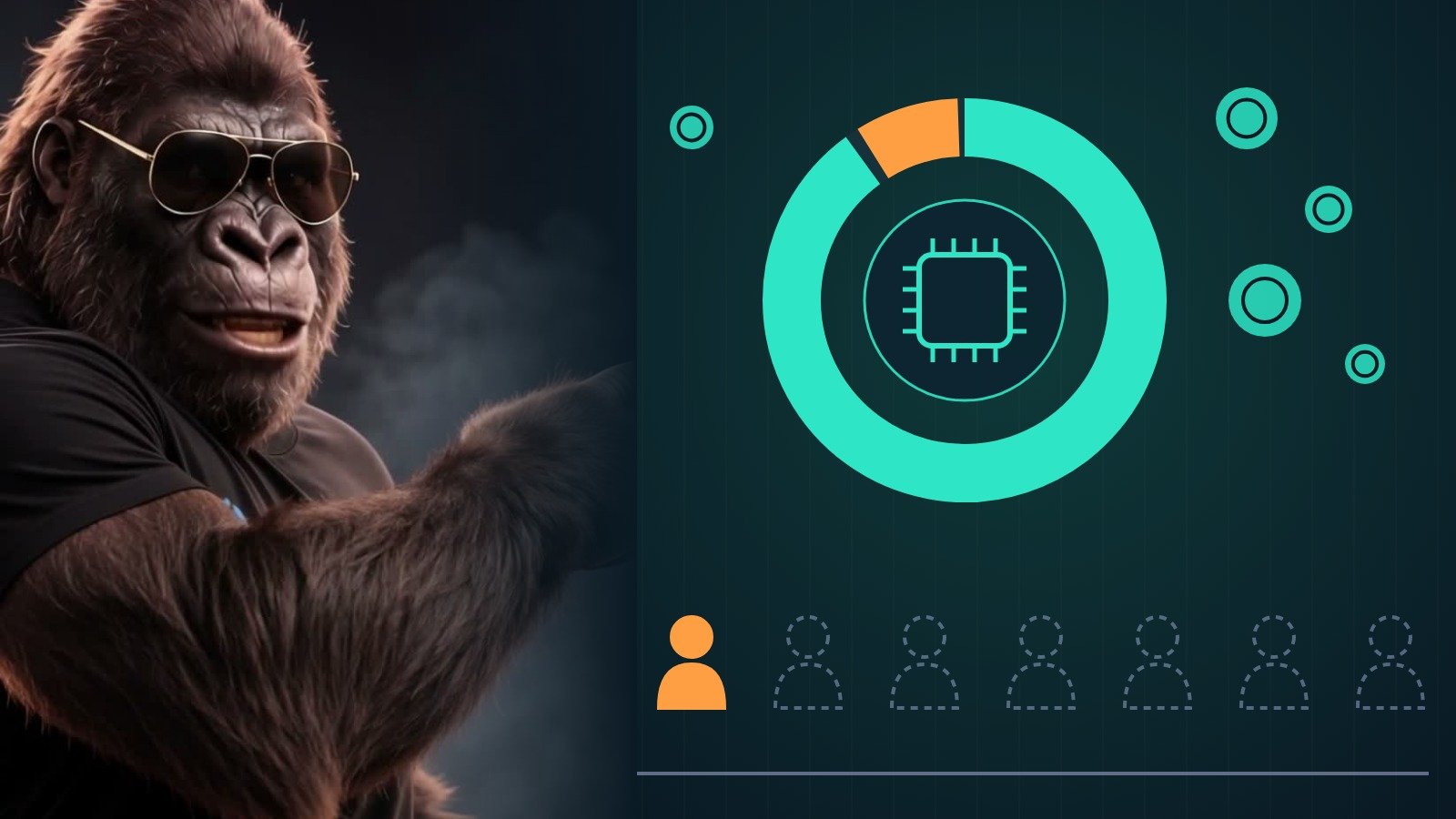
Anthropic’s Economics team published “Working with AI” on November 23, 2026. It is based on 66 interviews at 58 of Anthropic’s enterprise customers. Two thirds of those companies reported hiring less because of AI, but only two saw automation fully eliminate a position.
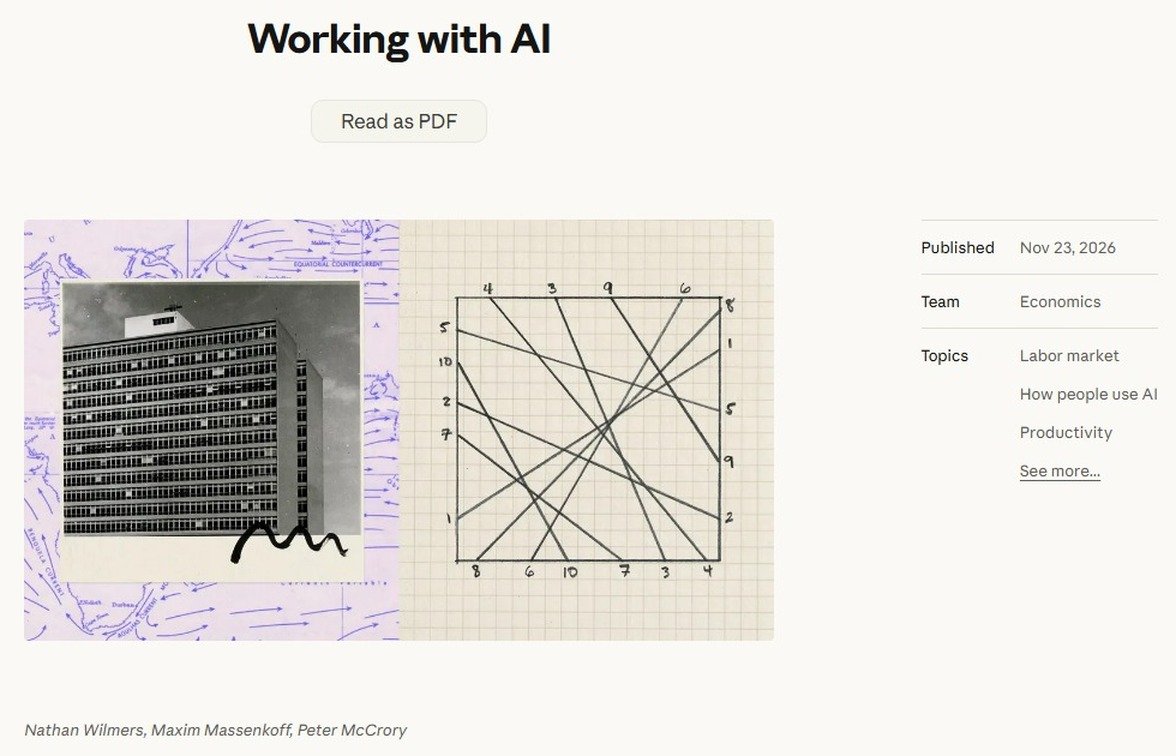
Source: Anthropic
Read the limits first. The companies were chosen for range of industry, size and AI use, and the report says the sample is “not a random or systematically representative sample.” All are Anthropic customers, all are in the US, and Anthropic sells the product it is studying. The value of each AI use was mostly described by the interviewees, not measured in A/B tests. We did not test anything for this post. The playbook below is our reading of the report, not a proven recipe.
The facts
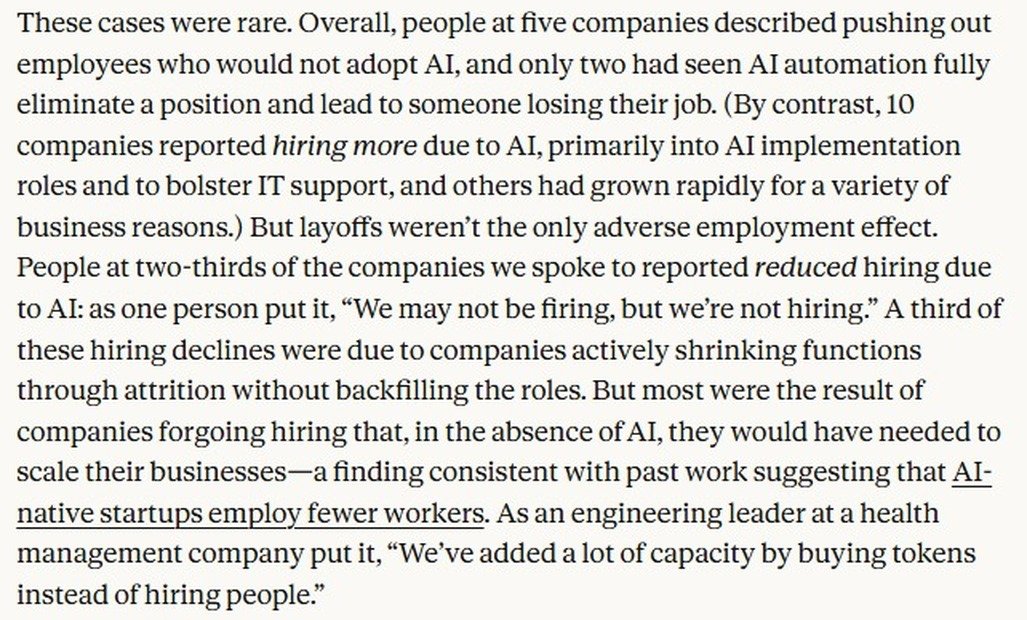
- Hiring: “We may not be firing, but we’re not hiring.” Two thirds of the companies reported less hiring due to AI. A third of those cases were roles shrunk by attrition. Most were hires never made (Anthropic report).
- Jobs: 2 companies saw a position fully eliminated, 5 pushed out people who would not adopt AI, and 10 hired more because of AI (Anthropic report).
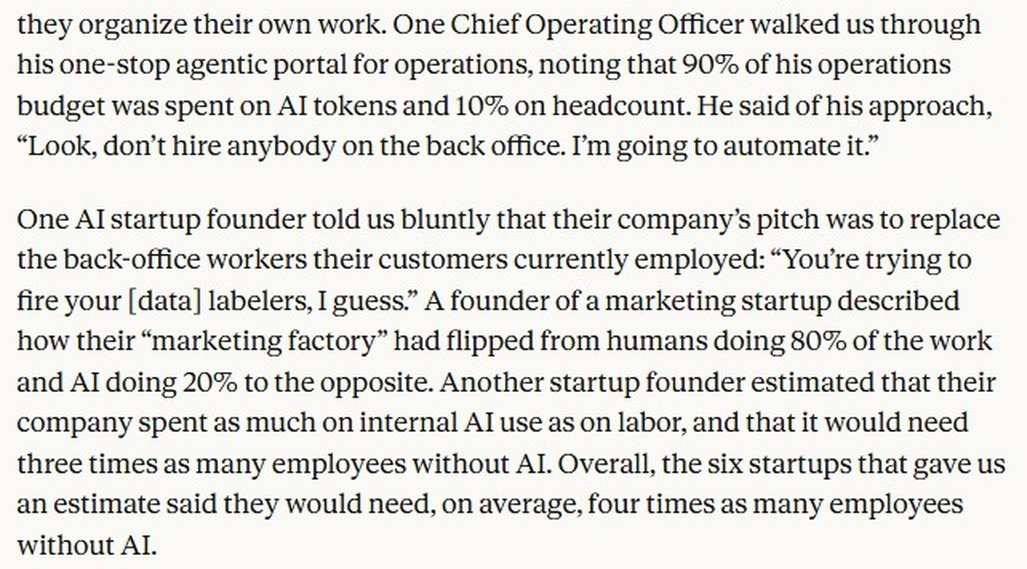
- Tokens: a startup COO said 90% of his operations budget goes to AI tokens and 10% to headcount. The six startups that gave an estimate said they would need on average four times as many employees without AI (Anthropic report).
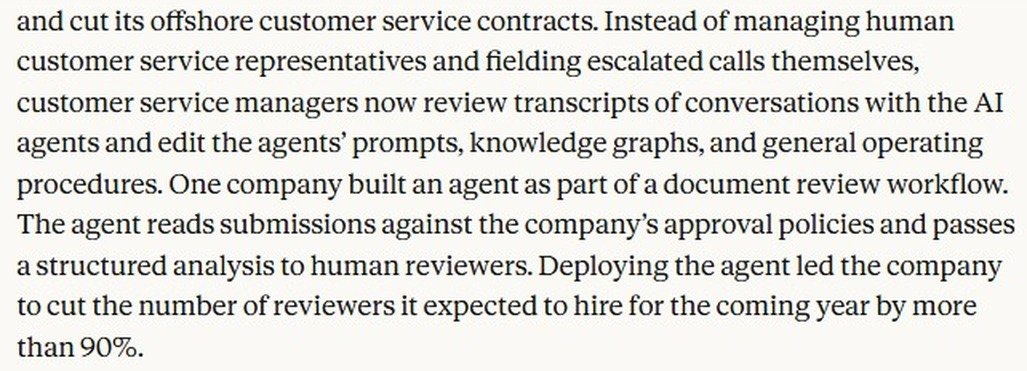
- Contractors: nine companies cut contracted developers, support, legal or back-office staff, many already offshore (Anthropic report).
- Review agent: one company built an agent that reads submissions against its approval policies and hands a structured analysis to human reviewers. It cut the reviewers it planned to hire by more than 90% (Anthropic report).
Source: Anthropic
Source: Anthropic
The review agent playbook
Source: Anthropic
The report describes this pattern but does not give a recipe. Each step below is ours. Each is tied to a bottleneck the report documents.
- Write the policy as a checklist. The report says one policy had to be clarified so agents could apply it rigorously. One rule per line, each a yes or no question, each with where to look for evidence.
- Fix the output format. Ask for the same structure every time, so a human can scan it. Example of ours:
{
  "case_id": "2026-0042",
  "checks": [
    { "rule": "refund-window", "result": "pass | fail | unclear", "evidence": "quote from the submission" }
  ],
  "recommendation": "approve | reject | needs_human"
}- Put the human on the decision. The agent prepares, the person decides. The report names reviewing AI output as a bottleneck, and one agent added a wrong “S” to an API endpoint and broke a release. Require a quoted evidence line for every result.
- Measure two numbers. Minutes per case: the report found reviewers from 2 minutes to “10-plus minutes” per submission. And how often the human disagrees with the agent (our metric, not the report’s).
- Keep reading transcripts. One engineer read every agent conversation for two months, then sampled them every two weeks. Give the agent your real policies and data, because the report lists missing context as a bottleneck.
Expect pushback. The reviewers at that company balked at doing double the cases, and the company considered gift cards. In another case, an agent surfaced the hardest conflicts to the staff, who pushed back, and it was shelved.
Three paths, one grid
The report’s three law firms map to three choices.
| Path | Example in the report | Gain | Risk |
|---|---|---|---|
| Automate a workflow | Mailroom, 5 minutes per letter, one developer built it in a month | Efficiency | Puts the job at risk, brings resistance |
| Distribute tools and wait | Staff build their own apps | Some valuable use | Unequal adoption, bottlenecks |
| Reorganize | Roles widened, people moved to bottleneck tasks | Highest-value uses, per interviewees | Needs planning |
What it changes
For app developers: the review agent is a pattern you can build into your own product. Measure it from day one (step 4).
For solo founders: you are the only reviewer. The pushback disappears, but your attention is the bottleneck, so steps 3 and 4 matter most.
For game developers and gamers: nothing changes directly today. We found no games data in the report.
Who can ignore it: anyone with fewer than a handful of cases a week. In our judgement, writing the checklist is probably not worth it at that volume.
Sources
- Anthropic Economics team (Nathan Wilmers, Maxim Massenkoff, Peter McCrory), “Working with AI”, Nov 23, 2026: https://www.anthropic.com/research/working-with-ai
- Same report as PDF: https://assets.claude.com/0cb09418f04d09baf72922e53a3f17383ef838c9.pdf
- The five steps, the JSON example and the disagreement metric are ours and untested. Screenshots are from the Anthropic report.